Free resource

Science Stars

The scientists and thinkers who shaped how we understand the tiny world — meet them with Dr. Monti.

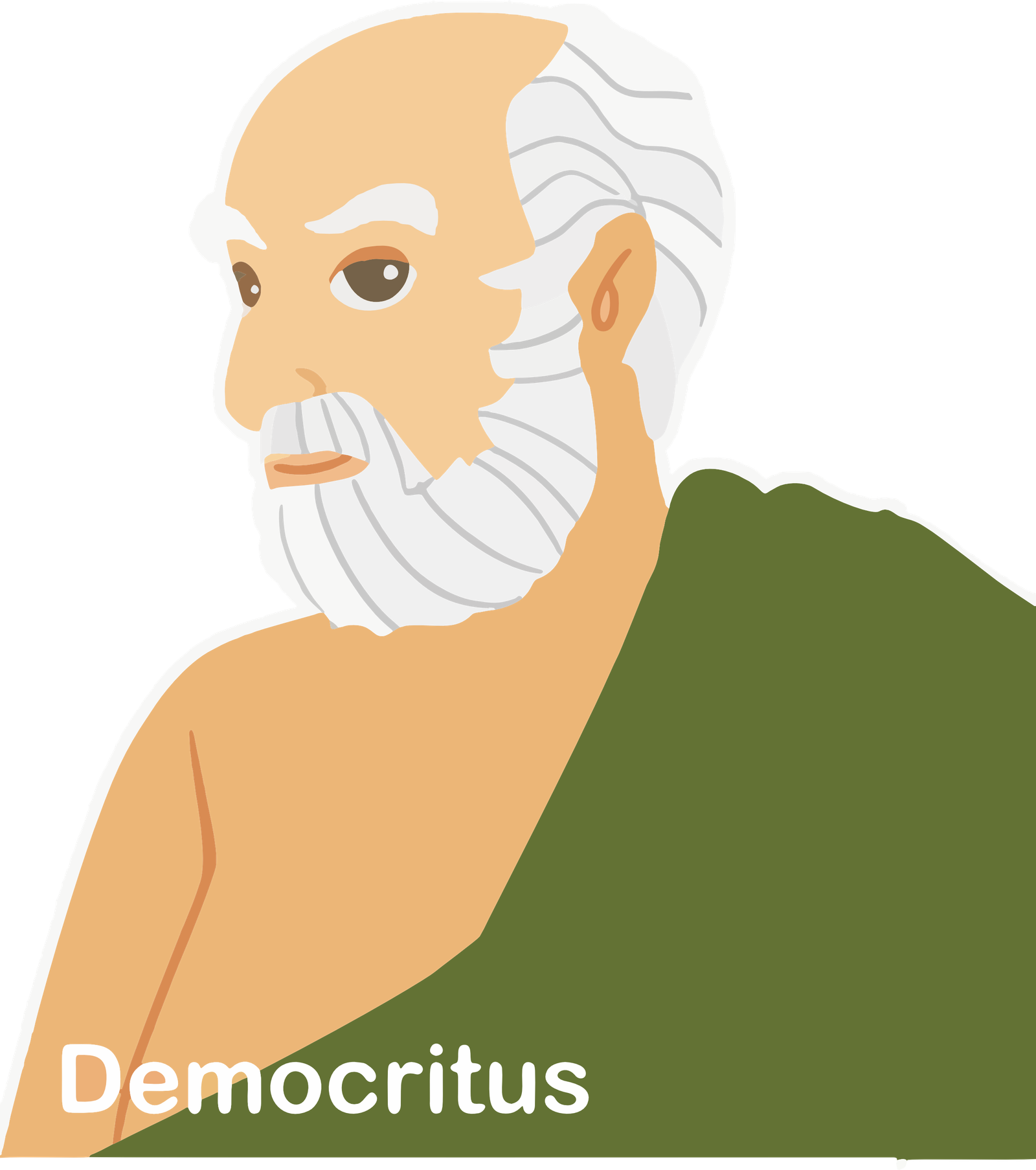
Democritus

Democritus

c. 460–370 BCE
Who were they?

Pre-Socratic Greek philosopher from Abdera. He is considered one of the first to propose an atomic theory of matter, many centuries before modern science confirmed that atoms exist.

Key contribution

He proposed that all matter is made of indivisible, invisible particles called atoms that move through empty space, and that atoms differ in shape, size and position — which explains the variety of the world.

Why it matters

His atomist vision was the seed of modern physics and, ultimately, of quantum physics. It marks the beginning of the rational, naturalistic attempt to understand the fundamental structure of reality.
John Dalton

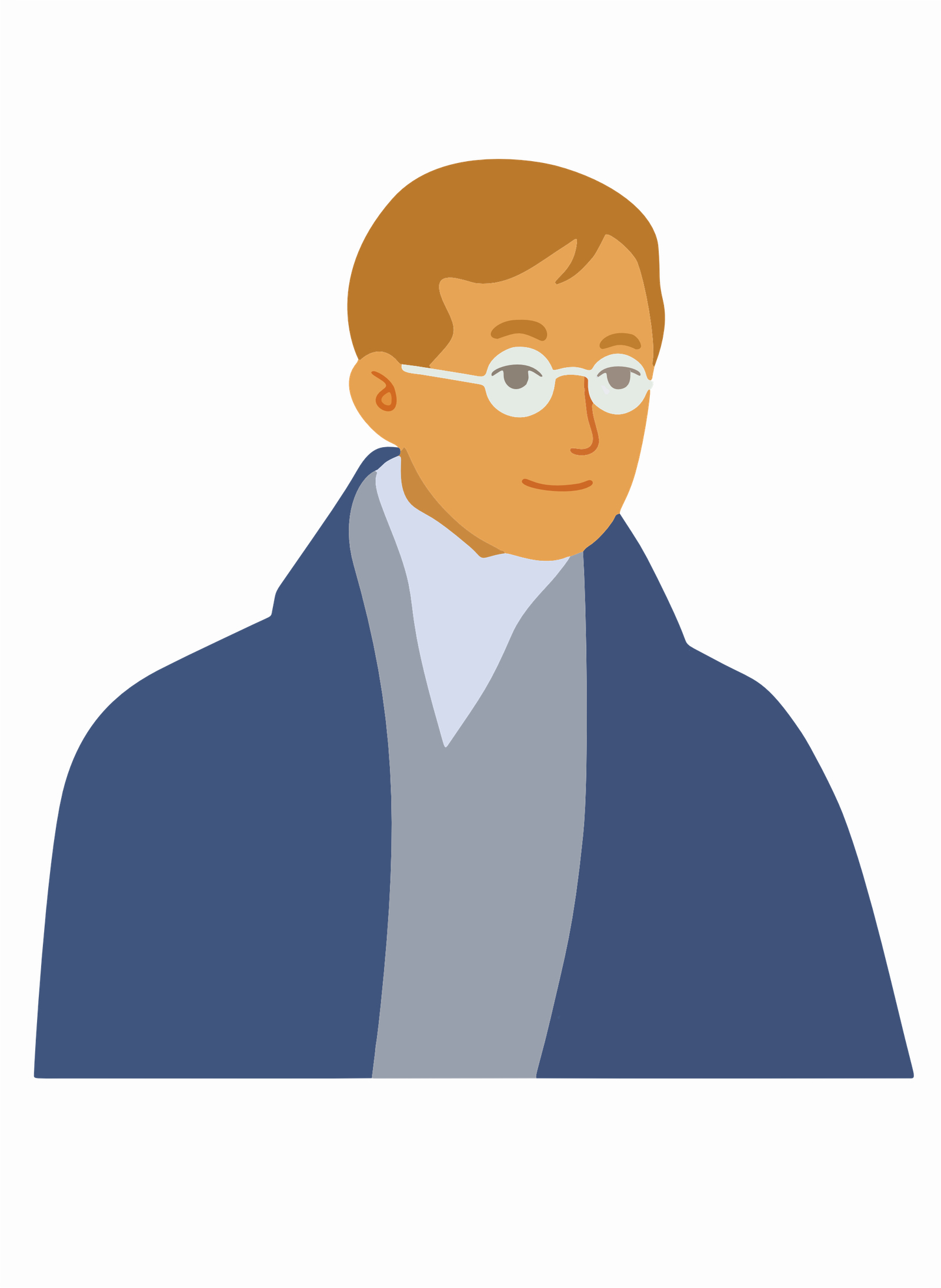
John Dalton

1766–1844
Who were they?

English chemist and physicist who helped formulate modern atomic theory. He studied gases and proposed that matter is made of indivisible atoms that combine with one another.

Key contribution

He proposed atomic theory (1803): elements are made of atoms; atoms of the same element are identical and combine in simple proportions to form compounds.

Why it matters

He laid the foundations of modern chemistry and of the atomic thinking that would later be essential to understanding the structure of matter and quantum physics.

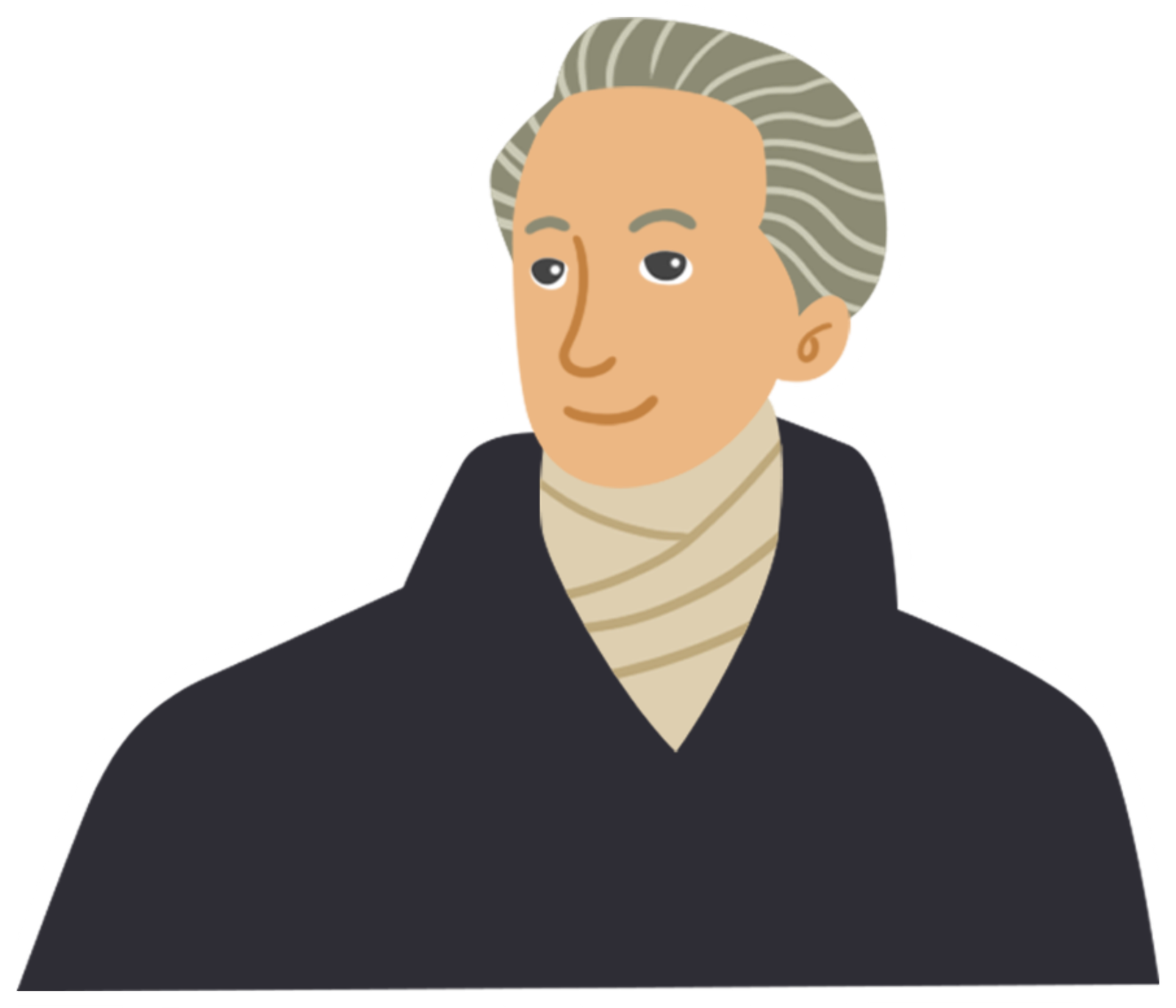
Thomas Young

Thomas Young

1773–1829
Who were they?

British physician and scientist, famous for his double-slit experiment. A polymath, he also studied light and even helped decipher Egyptian hieroglyphs.

Key contribution

He carried out the double-slit experiment (1801), showing that light behaves like a wave and produces interference patterns. Centuries later this experiment became central to understanding wave–particle duality.

Why it matters

It is one of the most important experiments in the history of physics and is still used to explain the heart of quantum mechanics: that particles can also behave like waves.

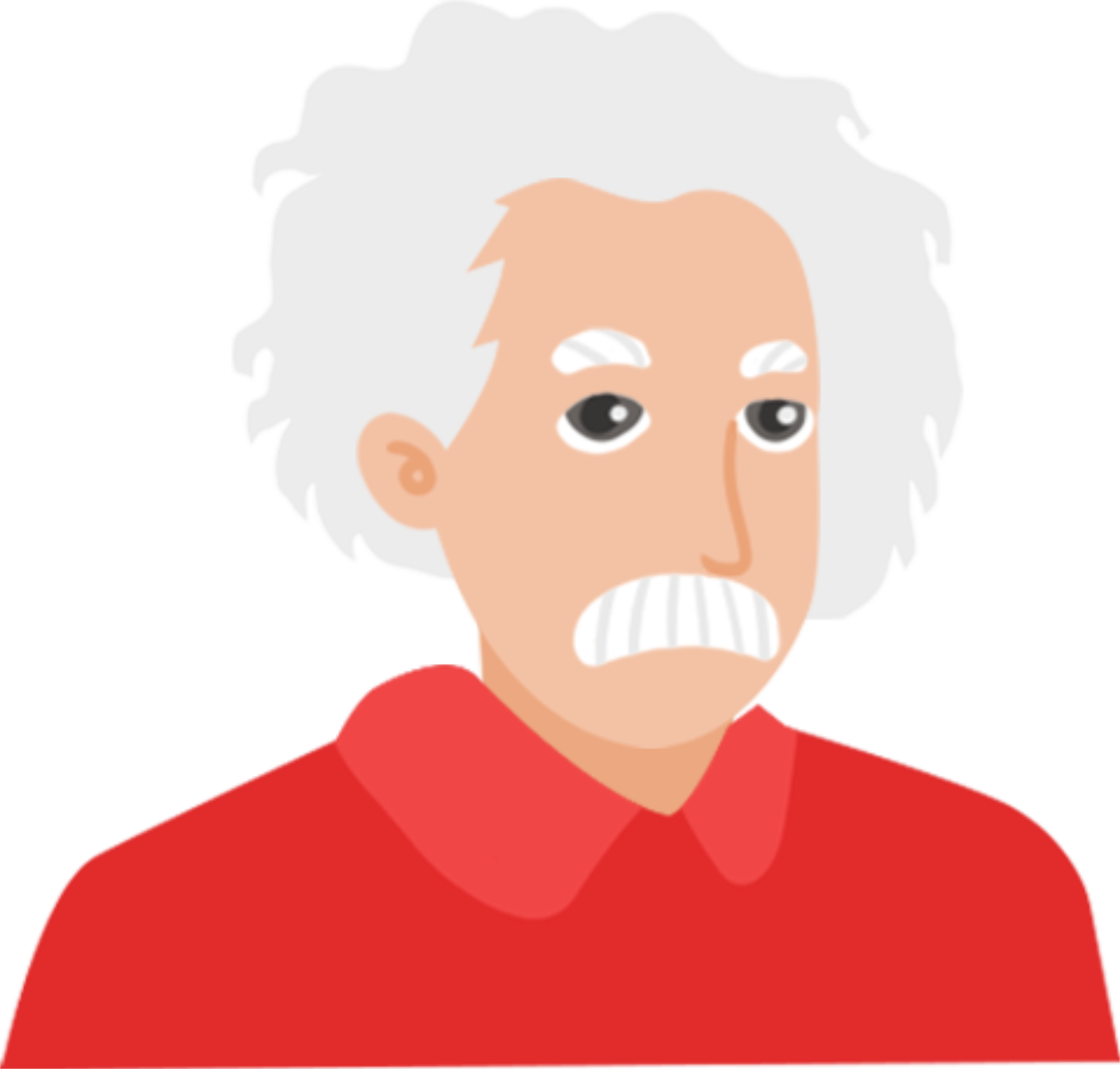
Albert Einstein

Albert Einstein

1879–1955
Who were they?

German theoretical physicist and one of the most brilliant minds of the 20th century. He developed the theory of relativity and made fundamental contributions to the study of the photoelectric effect and the nature of light.

Key contribution

He explained the photoelectric effect in 1905, showing that light is quantized into packets called photons — work that earned him the 1921 Nobel Prize in Physics and was key to the birth of quantum physics.

Why it matters

His work connected classical light with the idea of energy quanta, opening the way to modern quantum theory. His deep view of nature still shapes science and philosophy today.

Erwin Schrödinger

Erwin Schrödinger

1887–1961
Who were they?

Austrian physicist and a central figure of quantum mechanics. He developed one of the most famous equations in physics and played a key role in interpreting quantum theory.

Key contribution

He formulated the Schrödinger equation, which describes how a system's quantum state evolves over time. He also introduced the famous “Schrödinger's cat” to illustrate the problem of quantum superposition.

Why it matters

His equation lets us calculate the behaviour of quantum systems across many fields, from atoms to molecules and materials. His ideas on interpretation remain central to today's debates in quantum physics.

Werner Heisenberg

Werner Heisenberg

1901–1976
Who were they?

German theoretical physicist and one of the creators of quantum mechanics. He received the Nobel Prize in Physics in 1932 for his work.

Key contribution

He formulated the uncertainty principle (1927): we cannot know a particle's exact position and speed at the same time. He also developed matrix mechanics, one of the first formulations of quantum theory.

Why it matters

His principle changed forever how we understand nature, showing that in the quantum world we can only speak of probabilities. It is one of the deepest ideas in modern physics.

Hendrik Casimir

Hendrik Casimir

1909–2000
Who were they?

Dutch physicist interested in quantum theory, thermodynamics and solid-state physics. He carried out theoretical research with important experimental implications.

Key contribution

In 1948 he predicted the Casimir effect: an attractive force between two neutral metal plates placed very close together, caused by fluctuations of the quantum vacuum. Together with Dirk Polder he also studied related forces between atoms and surfaces, known today as the Casimir-Polder interaction.

Why it matters

The Casimir effect was confirmed experimentally decades later and shows that the quantum vacuum has real, measurable physical effects. It is key to surface physics, nanotechnology and the search for new fundamental forces.

John Bell

John Bell

1928–1990
Who were they?

Northern Irish physicist specialising in quantum field theory and the philosophical foundations of quantum mechanics. His work connected theory with real experiments.

Key contribution

He formulated Bell's inequalities, which make it possible to tell apart the predictions of quantum mechanics from those of local hidden-variable (deterministic) theories. His inequalities have been verified experimentally.

Why it matters

Bell's work made it possible to test whether quantum particles could be explained by hidden local properties. Later experiments violated Bell's inequalities and strongly supported the predictions of quantum mechanics: particles can stay correlated no matter how far apart they are.

Hugh Everett III

Hugh Everett III

1930–1982
Who were they?

American physicist known for proposing a radical and elegant interpretation of quantum mechanics. His work has had a great influence on philosophy and physics.

Key contribution

He proposed the many-worlds interpretation, in which every possible outcome of a quantum event happens in continually branching parallel universes. It requires no collapse of the wave function.

Why it matters

His idea offers a coherent, deterministic way to understand quantum theory and resolves the measurement problem. It has inspired debate, research and new ways of thinking about reality and the multiverse.

Stephen Wiesner

Stephen Wiesner

1942–2021
Who were they?

American physicist and a pioneer of quantum information. Far ahead of his time, his ideas laid the foundations of quantum cryptography.

Key contribution

He proposed the concept of “quantum money” and quantum coding in the late 1960s — ideas that later inspired the first protocols for secure communication using quantum physics.

Why it matters

His work gave rise to quantum cryptography, today essential for imagining communications that are impossible to copy or eavesdrop on. He was a visionary whose ideas arrived decades before the technology.

Charles Bennett

Charles Bennett

1943–present
Who were they?

American physicist and a pioneer of quantum information science. He joined IBM Research in 1973 and is an IBM Fellow. He has been key to uniting quantum physics with information theory.

Key contribution

He helped develop quantum teleportation and the superdense coding and entanglement protocols. He was one of the first to study the fundamental limits of information from a quantum perspective.

Why it matters

His work is essential to quantum computing, secure communications and quantum cryptography. He laid the foundations for harnessing quantum effects to handle information.

Andrei Linde

Andrei Linde

1948–present
Who were they?

Russian-American particle theorist and cosmologist, and a professor at Stanford University. He is known for his ideas about the early universe and the concept of eternal cosmic inflation.

Key contribution

In the 1980s he developed the model of cosmic inflation, which explains the uniformity and flatness of the universe. He proposed the inflationary multiverse, where bubble universes continually arise from inflation.

Why it matters

His ideas connect quantum physics with cosmology on enormous scales. They offer answers to big questions about the origin, structure and fate of the universe.

David Deutsch

David Deutsch

1953–present
Who were they?

British physicist and a pioneer of quantum computing, and a professor at the University of Oxford. He has worked on quantum theory, logic and the philosophy of science, and is an enthusiastic communicator of the potential of quantum technologies.

Key contribution

In the early 1980s he proposed the idea of a universal quantum computer and developed the quantum Turing machine, a generalisation of classical computing. He argues that quantum computing is more powerful than the classical kind.

Why it matters

His ideas helped found the modern theory of quantum computing. He inspires research and debate about the limits of knowledge, reality and machines' ability to solve complex problems.